

On 16 July 2026, the EBO-PEP trial team enrolled the first participant in Democratic Republic of the Congo (DRC). As of 14 September, more than 200 people are already taking part in the clinical trial!
More than 200 participants
To date, 204 adults and children over the age of 12, identified to be ‘high-risk contacts’ of a Bundibugyo Ebola case, have been enrolled in the EBO-PEP clinical trial evaluating obeldesivir – an antiviral developed by Gilead Sciences – for post-exposure prophylaxis.
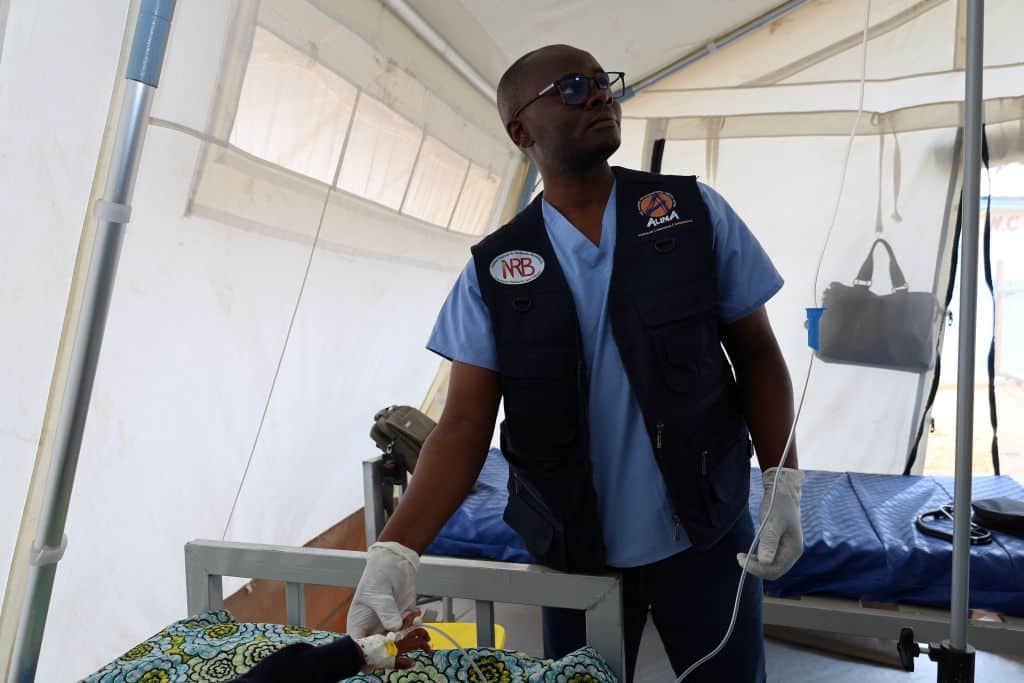
They are followed in one of the two investigation centres (or ‘PEP centres’) located in the Ituri province, the epicentre of the current outbreak: 111 at the Evangelical Medical Centre (CME) in Bunia and 93 at Rwampara Hospital.
In addition, 67 children under the age of 12 and high-risk pregnant or breastfeeding women with high-risk contact are taking part in a ‘compassionate use’ cohort [1]: 32 at the CME in Bunia and 35 at Rwampara Hospital.
A steady increase in resources

The teams from the EBO-PEP trial consortium remain mobilised, alongside the DRC’s Ministry of Health, to continue increasing the number of participants.
A new PEP centre, coordinated by the National Institute for Biomedical Research (INRB) – a co-sponsor of the trial alongside ANRS MIE / Inserm -, is currently being set up near the Nizi Ebola Treatment Center (CTE), in collaboration with the NGO ALIMA (The Alliance for International Medical Action).
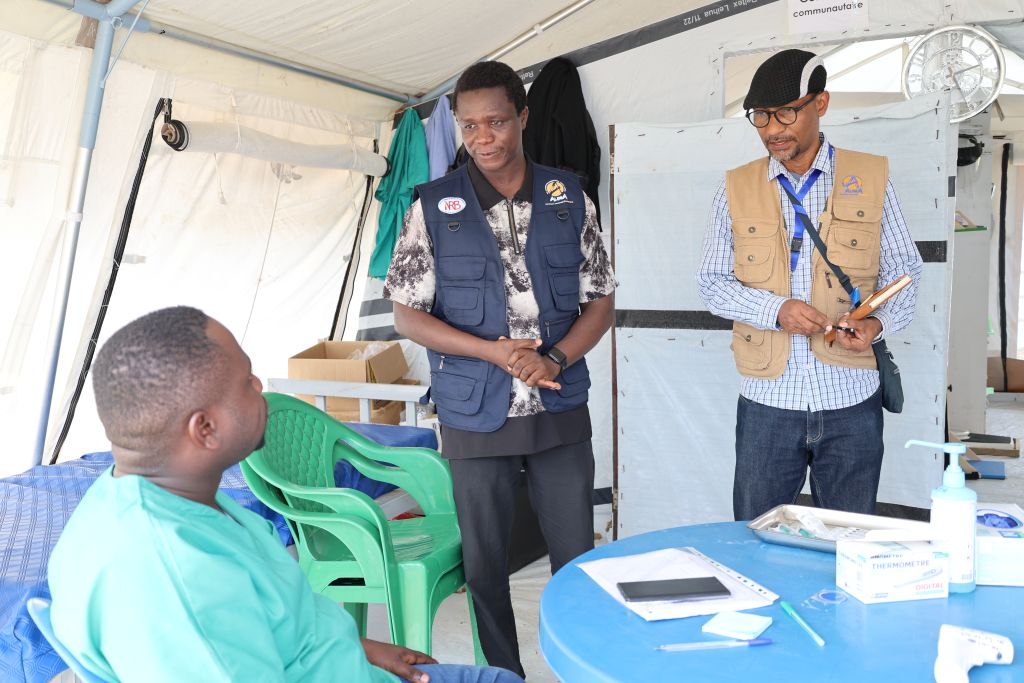
At the same time, the African Centre for Disease Control and Prevention (Africa CDC) and the World Health Organisation (WHO), also with support from ALIMA and INRB, have set up new mobile teams to reach and identify high-risk contacts in communities located in more remote areas.

This project is supported by the Global Health EDCTP3 Joint Undertaking and its members, Africa CDC as well as France’s BPI. A special thank you to Gilead Sciences for their valuable support to EBO-PEP.
[1] : a cohort which, by way of exception, allows medicines without marketing authorisation, or medicines authorised for a specific indication, to be used to treat serious or rare diseases where no suitable treatment is available, the patient cannot be included in a clinical trial, and treatment cannot be delayed. (Source: ANSM)
Lead photo credit: ALIMA


